Rooibos: discover South Africa's red herbal infusion
Picture a steaming cup with warm copper hues, a gentle infusion that soothes the soul without ever disturbing your sleep. Rooibos, South Africa's finest botanical treasure, takes us on a sensory journey unlike any other. Far more than a simple drink, this remarkable plant embodies the South African art of living: authentic, comforting and naturally wholesome.
Guide contents
Choose your starting point in the guide
-
 Rooibos Benefits for Your Health: The Herbal Infusion Worth
12 articles
Get started
Rooibos Benefits for Your Health: The Herbal Infusion Worth
12 articles
Get started
-
 Rooibos Side Effects: 5 Contraindications Worth Knowing
11 articles
Get started
Rooibos Side Effects: 5 Contraindications Worth Knowing
11 articles
Get started
-
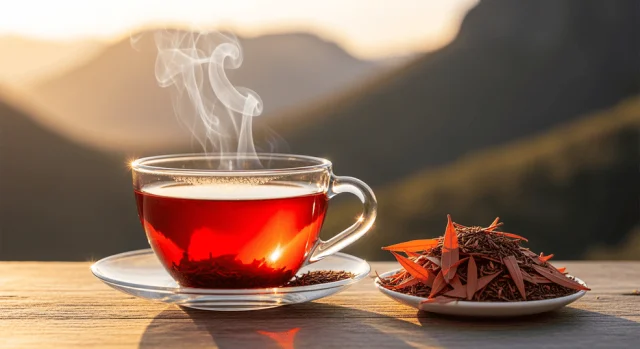 What Is Rooibos? Discover This Caffeine-Free Herbal Infusion
11 articles
Get started
What Is Rooibos? Discover This Caffeine-Free Herbal Infusion
11 articles
Get started
-
 How to Brew the Perfect Cup of Rooibos
11 articles
Get started
How to Brew the Perfect Cup of Rooibos
11 articles
Get started
-
 Vanilla Rooibos: where comfort meets indulgence
12 articles
Get started
Vanilla Rooibos: where comfort meets indulgence
12 articles
Get started
-
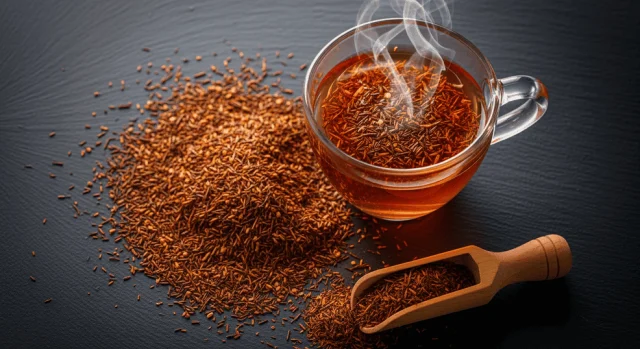 Where to Buy Quality Rooibos: A Complete Guide to Choosing
8 articles
Get started
Where to Buy Quality Rooibos: A Complete Guide to Choosing
8 articles
Get started
At Thés & Traditions, we hold a deep fondness for this red infusion that turns every pause into a moment of pure serenity. Let us explore together the secrets of this botanical wonder that has won the hearts of tea lovers the world over.
Everything you need to know about rooibos
- A truly unique plant: Rooibos (Aspalathus linearis) grows only in the Cederberg mountains of South Africa
- Naturally caffeine-free: Perfect for the whole family, even in the evening
- A distinctive flavour: Soft notes of hazelnut and honey, with a gentle natural sweetness
- Rich in antioxidants: Beneficial flavonoids and minerals
- Wonderfully versatile: Enjoy it plain or flavoured, hot or iced
The origins of South Africa's red bush
The story of rooibos begins in the rugged mountains of the Cederberg, a few hours' drive from Cape Town. This region, unlike anywhere else on earth, is home to a botanical treasure that the Khoikhoi people have cherished for centuries. The name "rooibos" comes from Afrikaans and means, quite literally, "red bush" — a reference to the distinctive colour the leaves take on after fermentation.
What makes this plant so remarkable is its exclusively South African character. Despite many attempts, no country has ever succeeded in cultivating rooibos outside its native terroir. This geographical exclusivity makes rooibos a true piece of South Africa's natural heritage.
The first European settlers discovered this infusion through the local communities who had long prepared it in their traditional way. Quickly won over by its natural gentleness and soothing qualities, they began to adopt it as an alternative to tea, which was then prohibitively expensive to import.
Red rooibos or green rooibos: understanding the difference
Contrary to what one might expect, red and green rooibos both come from the same plant. The difference lies entirely in the process that follows the harvest.
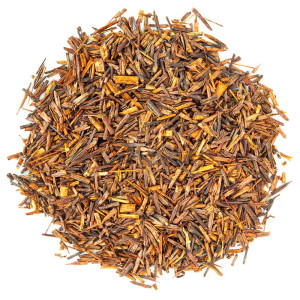
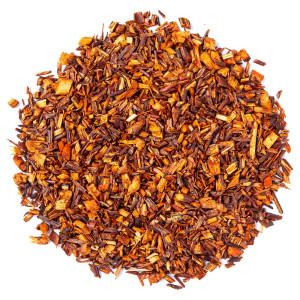
Traditional red rooibos undergoes a natural fermentation that gives it its characteristic copper colour and develops those familiar notes of hazelnut and honey. This fermentation process, which takes several hours in the sun, transforms the tannins and releases the smooth, rounded flavours we know and love.
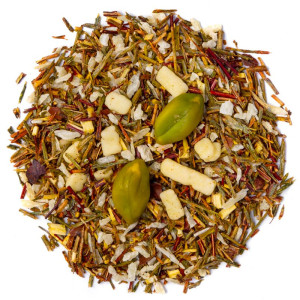
Green rooibos, the newer of the two, is simply dried without fermentation. It retains its original green colour and offers a fresher, more herbaceous flavour profile, with a light touch of astringency. Rich in antioxidants, it appeals to those who prefer more vegetal, plant-forward flavours.
At Thés & Traditions, we favour red rooibos for its incomparable roundness and its ability to pair beautifully with our flavoured creations. That natural softness makes it the perfect base for our indulgent blends.
The natural benefits of a caffeine-free infusion
One of rooibos's greatest qualities is its complete absence of caffeine. This makes it the ideal infusion for the whole family, from the youngest to the oldest, and at any time of day. No more restless nights after an evening cup.
Naturally rich in essential minerals including iron, calcium, potassium and zinc, rooibos offers far more than simple pleasure. Its flavonoids, particularly aspalanthin and quercetin, give it well-recognised antioxidant properties.
Rooibos lovers particularly appreciate its soothing qualities. This infusion is a perfect companion for moments of relaxation and helps create that atmosphere of calm so central to our philosophy. Its natural gentleness also makes it an excellent choice for those who are sensitive to more stimulating drinks.
Interestingly, rooibos has traditionally been used in South Africa to ease colic in infants — a centuries-old practice that speaks volumes about its exceptional gentleness.
How to brew and enjoy your rooibos
Brewing rooibos is a simple pleasure that brings out all the richness of this infusion. Unlike tea, rooibos has nothing to fear from boiling water — on the contrary, it needs that heat to fully release its aromas.
For a perfect cup, allow one teaspoon of rooibos per 200 ml of freshly boiled water. Steep for 5 to 7 minutes to achieve that beautiful amber colour and characteristic rounded flavour. The longer you steep, the more the flavours develop — and unlike tea, it will never turn bitter.
Rooibos is delightful both on its own and with a little something added. A touch of honey draws out its natural sweetness, while a slice of lemon brings a bright, citrusy lift. Served over ice, it becomes a wonderfully refreshing summer drink, especially with a few fresh mint leaves.
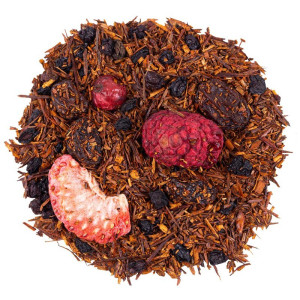
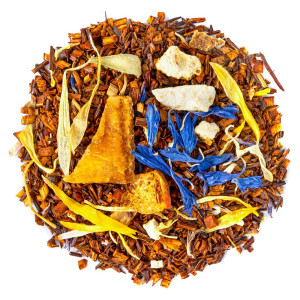
At Thés & Traditions, we particularly love pairing it with bourbon vanilla, warming spices like cinnamon, or red fruits — creating indulgent blends that turn every tasting into something a little special.
Our signature rooibos creations
In our workshop, rooibos inspires our master blenders to craft unique compositions that celebrate this exceptional infusion. Each creation tells a story, evokes an emotion, and accompanies a particular moment in the day.
Our Rooibos Vanille brings together the softness of the red bush with the creamy notes of bourbon vanilla. This indulgent pairing turns every cup into a sweet moment of comfort, perfect for a cosy afternoon or a quiet evening in.
For those who enjoy more complex flavours, our Rooibos aux Épices reveals warm notes of cinnamon, cardamom and ginger. This spiced creation warms winter evenings and brings an exotic dimension to your tea ritual.
Those with a sweet tooth will fall for our Rooibos Caramel, where rooibos's natural gentleness meets notes of salted butter caramel. An indulgent creation that makes every cup a moment of pure pleasure.
Frequently asked questions about rooibos
Strictly speaking, no. Unlike tea, which comes from the Camellia sinensis plant, rooibos is derived from a shrub in the legume family. This is why "rooibos infusion" is technically more accurate than "red tea", even though the latter remains a common way to refer to it.
Absolutely. Its complete lack of caffeine makes rooibos an excellent choice for expectant mothers who want to keep enjoying a warm, comforting drink. Its mineral content makes it particularly well-suited to this time of life.
Like all our infusions, rooibos keeps best in a cool, dry place, away from light and strong odours. An airtight tin or our original packaging works perfectly. Stored with care, it will retain its flavour for several years.
It is not a sleep aid as such, but rooibos does genuinely support relaxation, thanks to its absence of caffeine and its naturally calming properties. It makes a lovely part of an evening ritual, enjoyed alongside a good book or a quiet moment of reflection.
Organic rooibos is grown according to the principles of organic farming, without pesticides or chemical fertilisers. At Thés & Traditions, we favour rooibos sourced from sustainable cultivation practices that respect both the unique environment of the Cederberg and the local communities who tend it.