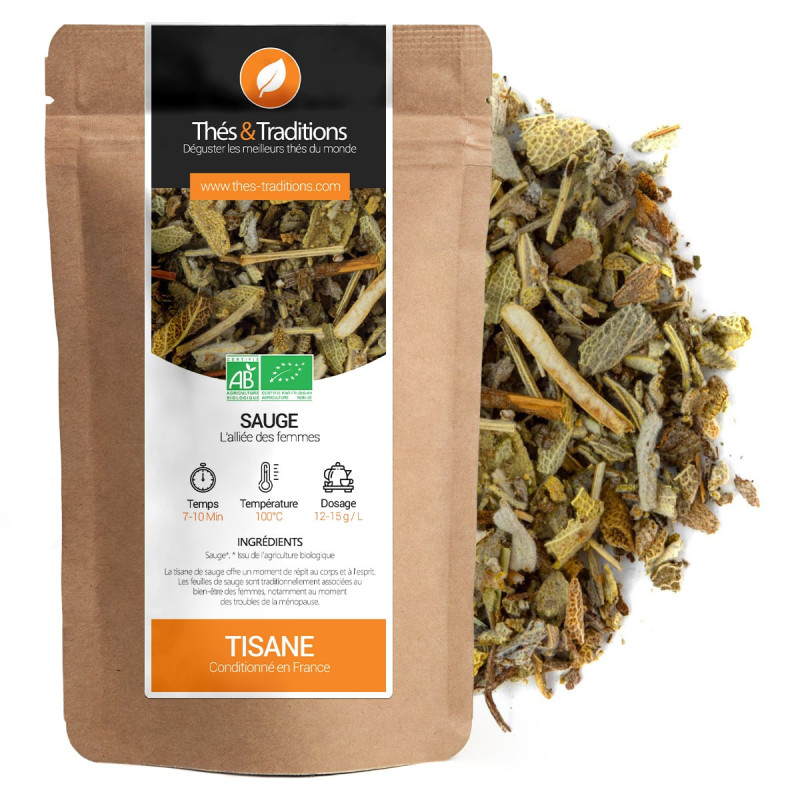
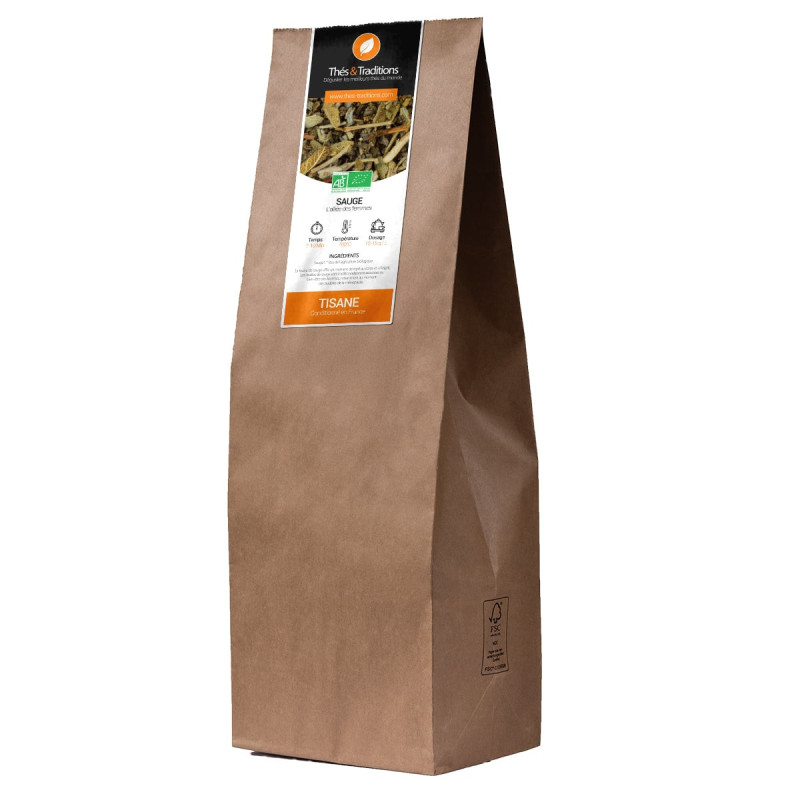
At a glance: Sage herbal infusion made from organic whole-leaf common sage (Salvia officinalis), with an herbaceous, camphor-tinged profile. Brewing: 13 to 18 g/L at 100°C for 5 to 10 minutes. A traditional ally for women's cycles and menopause.
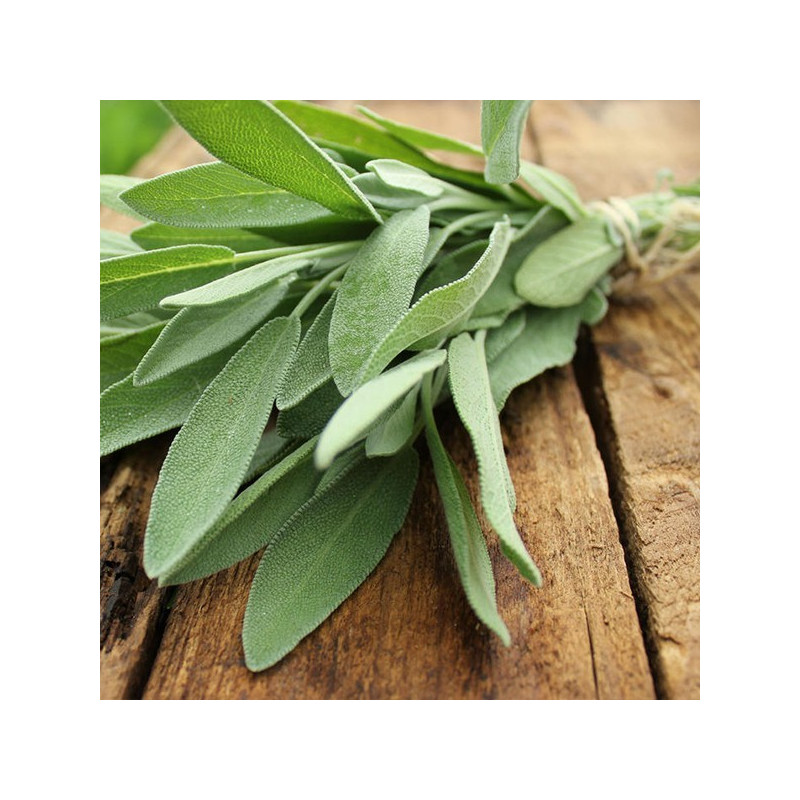
Our sage herbal infusion celebrates a aromatic plant revered since antiquity. Common sage (Salvia officinalis) is one of those time-honoured herbs that has crossed the centuries, present in every monastery garden and traditional European pharmacopoeia. Its very name comes from the Latin salvare, meaning "to save."
We have selected whole leaves from organic farming, carefully dried to preserve their natural essential oils. This infusion is part of our herbal infusions range, dedicated to everyday well-being, caffeine-free, and enjoyable any time of day or evening. Explore our selection of single-herb infusions, crafted to accompany every moment of the day.
The aromatic profile of common sage
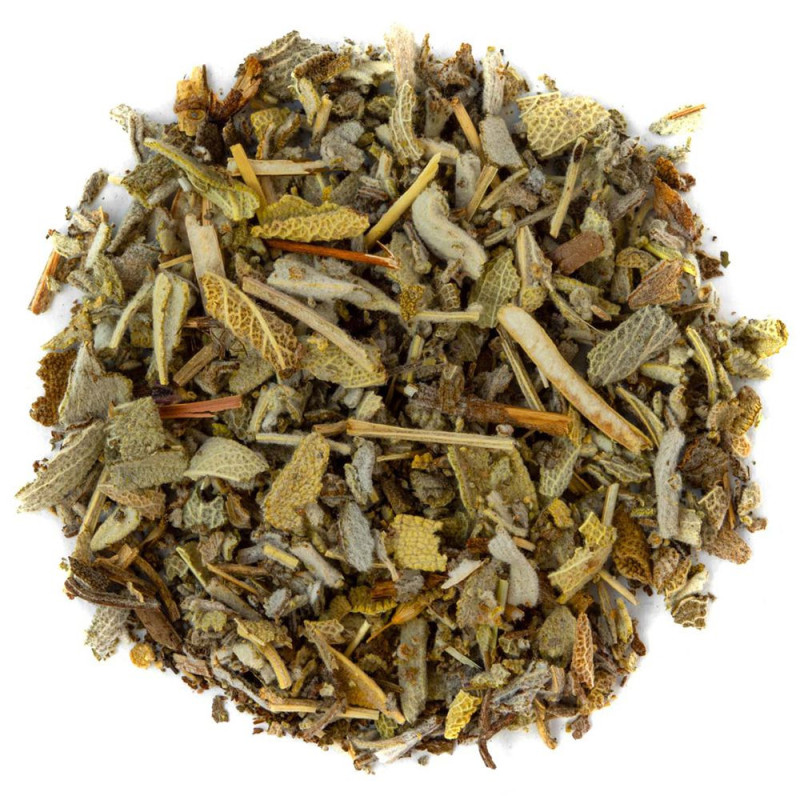
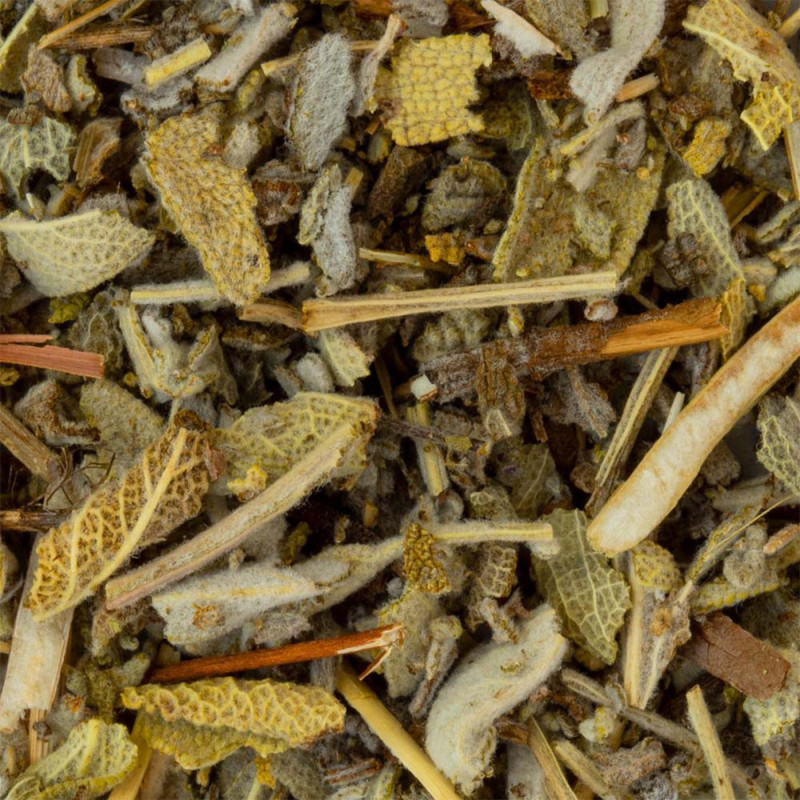
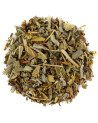
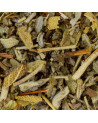
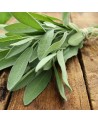
The moment you open the pouch, the plant's fragrance is released instantly: herbaceous, fresh, lightly camphorated, with that unmistakable aromatic signature. The dried leaves retain a beautiful grey-green hue, characteristic of a carefully tended harvest.
In the cup, the liquor takes on a clear, luminous golden-yellow colour. The nose reveals frank vegetal notes, almost mentholated, underpinned by a subtle spiced warmth. On the palate, the full complexity of this medicinal plant unfolds.
Top notes: fresh herbaceous, a hint of eucalyptus, a camphor touch that awakens the senses from the very first sip.
Heart notes: deep vegetal, almost resinous, with a rounded aromatic quality reminiscent of thyme and rosemary, its cousins in the Lamiaceae family.
Base notes: a noble, lingering bitterness — the hallmark of great medicinal plants — that leaves a lasting freshness on the finish.
This infusion is best enjoyed pure, without sugar, to honour its distinctive character. Those who prefer a gentler profile can add a drizzle of honey or a slice of lemon. You might also enjoy our Orange Blossom Mist herbal infusion for a more floral, sun-kissed alternative.
How to brew sage herbal infusion
Brewing a good sage infusion requires little equipment but a few precise gestures. Here is the method we recommend to bring out the full aromatic potential of the dried leaves and make the most of their traditional benefits.
Dosage: use 13 to 18 grams of leaves per litre of water, roughly one heaped teaspoon per 250 ml cup. A generous measure yields a fuller-bodied infusion, ideal for traditional use. For a single cup, a level teaspoon is enough for those accustomed to gentler flavours.
Water temperature: bring the water to a full boil at 100°C. Unlike green tea, which calls for water cooled to 70–80°C, common sage, like most dried herbs, releases its active compounds and aromas in near-boiling water.
Brewing time: steep for 5 to 10 minutes in a covered teapot or cup. Covering is essential to retain the volatile essential oils that would otherwise escape with the steam. The longer the steep, the more pronounced the bitterness and the higher the concentration of active compounds.
Straining: use a fine-mesh strainer, a generously sized tea infuser (the leaves expand as they steep) or a paper filter. Once brewed, the infusion keeps for a few hours at room temperature, or until the next day in the refrigerator for a refreshing iced version in summer.
For a truly mindful ritual, brew your infusion in a glass teapot: watching the golden-yellow colour slowly bloom through the hot water is part of the pleasure. Any herbalist will tell you that this unhurried gesture is itself part of the experience. Try this infusion at the end of a meal, when its herbaceous notes pair beautifully with a quiet moment of calm.
The traditional benefits of sage
Common sage is among the most thoroughly documented plants in European phytotherapy. The EMA recognises its traditional use for relieving hot flushes associated with menopause and easing certain mild digestive complaints such as dyspepsia.
It is traditionally used to support women during irregular cycles and perimenopause. Its natural compounds contribute to feminine comfort gently and gradually, as part of an overall healthy lifestyle.
On the digestive side, the ANSES lists common sage among the plants traditionally consumed to promote comfortable digestion after a rich meal. A cup after lunch can easily become a soothing ritual.
Sage is also known for its action on excessive perspiration and for its refreshing properties as a mouth rinse, when a cooled infusion is used as a gargle. Julien Huot, founder of Thés & Traditions, personally selects each batch to ensure consistent aromatic quality.
If you'd like to explore which plants best suit your needs, our guide how to choose your herbal infusion is here to help. Savour this infusion as part of your end-of-day ritual to appreciate its full refinement.
Storing loose-leaf sage
To preserve the fragrance and properties of your leaves, store them in an airtight container, away from light, moisture and heat. A metal tin or an opaque glass jar works perfectly.
Consumed within 12 to 18 months of opening, sage retains its full aromatic intensity. Beyond that, the essential oils gradually evaporate and the infusion loses some of its character, though it remains perfectly safe to consume.
Frequently asked questions
What are the benefits of sage herbal infusion?
Sage herbal infusion is traditionally used to ease hot flushes related to menopause, support women's cycles and promote comfortable digestion. It also contributes to respiratory comfort. These uses are recognised by the EMA as traditional.
How do you brew sage herbal infusion?
Use 13 to 18 g of dried leaves per litre of water, roughly one teaspoon per cup. Pour water at 100°C, cover and steep for 5 to 10 minutes. Strain before drinking, pure or lightly sweetened with honey to taste.
Does sage herbal infusion help with menopause?
Yes, common sage is traditionally recognised for supporting women during menopause, particularly for easing hot flushes and night sweats. Its use should form part of a broader approach, ideally discussed with a healthcare professional.
What are the side effects of sage?
When consumed in reasonable amounts as an infusion, sage is generally well tolerated. It is not recommended during pregnancy, breastfeeding or for people with epilepsy, due to its thujone content. Consult your doctor if you are currently undergoing any treatment.
How many cups of sage herbal infusion per day?
One to three cups a day is enough to enjoy its traditional benefits, spread throughout the day. Avoid prolonged consumption beyond a few weeks without medical advice, and alternate with other plants such as our Caribbean Dream herbal infusion.
Sources
Our information is based on the traditional monographs published by the EMA (European Medicines Agency) and on the work of the ANSES regarding plants consumed as infusions. These authoritative sources frame the traditional uses mentioned on this page.