

Rosemary herbal tea: benefits, preparation and precautions

In brief: Rosemary (Rosmarinus officinalis) is one of the best-documented aromatic plants in the European herbal tradition. Rich in rosmarinic acid and antioxidant compounds, it is traditionally enjoyed as an infusion for its warm, resinous aroma, as part of a balanced lifestyle. Use 1 teaspoon of dried leaves per cup of just-simmering water, steep for 10 minutes, and drink up to 2 to 3 cups per day.
Rosemary herbal tea is one of the oldest traditional infusions still enjoyed across Europe. Its use has been documented since the Middle Ages, and its monograph is today among the most robust held by the EMA (European Medicines Agency). This page covers the recognised traditional uses, the right way to prepare an infusion, and, crucially, the precautions you should know — because rosemary is not a plant to take lightly.
Rosemary: what we know today
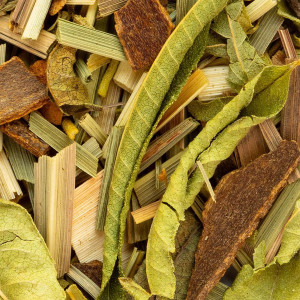 Stroll Through Provence Herbal Infusion€7.90
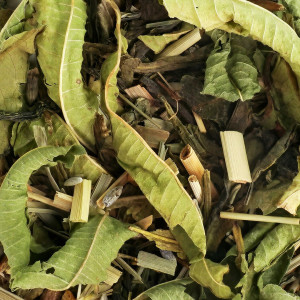 Promenade en Provence Green Tea€8.50
 Kunming White Tea€12.50
Rosemary (Rosmarinus officinalis, or Salvia rosmarinus under the more recent classification) is one of the few plants to feature in an EMA community herbal monograph. This means its traditional uses have been assessed by European health authorities and recognised as "plausible" for certain specific indications. In practical terms, the EMA documents the plant's longstanding traditional use as an infusion — without this constituting a health claim.
Rosemary leaves contain several active compounds, including rosmarinic acid, cineole, camphor, and various polyphenols with documented antioxidant activity. These constituents help explain why the plant has endured for centuries in Mediterranean herbal medicine.
Want to make it part of your daily routine? Rosemary features in our Balade en Provence herbal infusion — organic rosemary, thyme and lemon, naturally caffeine-free.
Documented traditional uses
Several properties of rosemary are described in the scientific literature and European reference texts. Without making any specific claim, here is what is known:
- After meals: traditionally, a cup of rosemary infusion is savoured after eating, as a warming ritual rooted in Mediterranean table culture.
- Invigorating aroma: the resinous, camphorous scent of rosemary has long been associated with study and focus. Research continues to explore its aromatic compounds, with no definitive conclusions to date.
- Antioxidant: its richness in polyphenols gives rosemary strong antioxidant activity in vitro. Rosemary extract is even used as a natural food preservative (E392).
- Muscle discomfort: traditionally used externally as an essential oil, never as a concentrated infusion.
The ANSES (French Agency for Food, Environmental and Occupational Health Safety) notes that traditional use does not remove the need for caution: a plant is still an active substance, and any claims should remain measured.
How to prepare a good rosemary infusion
The recipe is straightforward, but the details matter. Unlike tea, rosemary releases its aromas and active constituents slowly. A steep that is too short yields a flat, pale drink with little depth.
- Amount: 1 teaspoon (around 2 g) of dried leaves per 250 ml cup. If using fresh rosemary, double the quantity, as fresh leaves are less concentrated.
- Water: bring to a simmer (around 95 °C / 200 °F) rather than a rolling boil, which can degrade the volatile aromas.
- Time: steep for 8 to 10 minutes off the heat, with the cup covered to retain the essential oils.
- Straining: pass through a fine sieve. Once the infusion has cooled slightly, you can add a spoonful of honey or a few drops of lemon.
- Frequency: no more than 2 to 3 cups per day, over a limited period (2 to 3 weeks), then take a break.
Rosemary blends well with other plants for more personalised preparations. Our rosemary, thyme and lemon infusion follows this traditional blending logic. To compare with other everyday infusions, see our guide to choosing your herbal tea.
Fresh or dried rosemary: what's the difference?
Dried rosemary is more concentrated in aromatic compounds, as the drying process preserves the essential oils when carried out correctly (at low temperature, away from light). Fresh rosemary has a greener, almost resinous quality, but requires two to three times more plant matter to achieve the same flavour.
If you harvest your own rosemary, choose young shoots in spring or well-developed leaves in summer. Dry in the shade in a well-ventilated spot, then store in an airtight jar away from light. Our plant storage guide covers all the best practices in detail.
Beyond infusions: essential oil and precautions
Rosemary also exists as an essential oil, in three main chemotypes (1,8-cineole, camphor, verbenone), each with its own specific uses. Rosemary essential oil is not a complement to herbal tea — it is a far more concentrated product, to be used with care:
- Never taken orally without advice from a qualified aromatherapy practitioner.
- For diffusion, a few drops are sufficient. Avoid use around children under 6, pregnant women, or those who are breastfeeding.
- For topical application, always dilute in a carrier oil and patch-test on a small area first.
The ANSES has repeatedly highlighted the risks of inappropriate essential oil use, particularly camphor-rich types such as certain rosemary varieties.
Precautions and contraindications
Rosemary infusion is generally well tolerated, but caution is warranted in certain situations:
- Pregnancy and breastfeeding: not recommended without medical advice. Rosemary contains compounds that may influence uterine circulation.
- High blood pressure: in high doses, rosemary may slightly raise blood pressure. Those with cardiovascular conditions should use it moderately.
- Gallstones: rosemary's choleretic effect (stimulating bile production) is not advisable in cases of gallstones or bile duct obstruction.
- Epilepsy: camphor compounds may lower the epileptic threshold. Avoid without medical guidance.
- Anticoagulant medications: possible interactions. Inform your doctor of your consumption.
If in any doubt, or if you have a chronic condition, speaking to a doctor or pharmacist is always the best course of action.
Disclaimer: the information in this article is for educational purposes only and does not replace medical advice. If you have a health condition, are pregnant or breastfeeding, or are taking medication, consult your doctor before starting any plant-based regimen. Herbal infusions are not medicines.
Sources: European Medicines Agency, Community herbal monograph on Rosmarinus officinalis L. (HMPC) · Moss M. and Oliver L., Therapeutic Advances in Psychopharmacology (PMID:22612703) · Habtemariam S., Evidence-Based Complementary and Alternative Medicine (PMID:27117114) · ANSES, recommendations on the use of plants as infusions and essential oils.
Written by
Julien Huot, founder of Thés & Traditions. Tea selector since 2016, trained in tasting, and passionate about sharing the cultures of tea and herbal infusions.
Published 12 June 2019 · Updated 21 May 2026
Frequently asked questions
- No more than two to three cups, over a period of 2 to 3 weeks at a time, followed by a break of equal length. Beyond this, the effect diminishes and the risk of side effects increases.
- Some research has looked into its aromatic compounds, but no firm conclusions have been established to date. Rosemary is not a treatment for memory problems; it is appreciated above all for its aroma, as part of a balanced lifestyle.
- Not recommended without medical advice. Rosemary contains active compounds that may influence uterine circulation. Opt for gentler infusions during pregnancy, and always check with your midwife first.
- Both plants belong to the Lamiaceae family and share several traditional uses. Thyme has a warmer, more mentholated profile, while rosemary offers a more resinous, invigorating note. Two distinct aromatic experiences, each suited to different moments. Our thyme herbal tea guide explores its own particular qualities.
Go further
To deepen your exploration of herbal infusions, browse our complete guide to herbal teas, discover our selection of infusions for digestive comfort, or explore infusions for managing stress. You can also browse our full range of organic herbal teas and infusions.
Tempted to try it?
Our selection related to this article, loose leaf and organic.
Cherry Cake Herbal Infusion
Cherry Cake herbal infusion, a truly indulgent cherry infusion, captures the warmth of a homemade pastry.
€6.90Discover

Almond Cloud Herbal Infusion
Almond Cloud herbal infusion is a tender, indulgent almond infusion that brings together roasted almond, apple and popcorn in a…
€7.20Discover
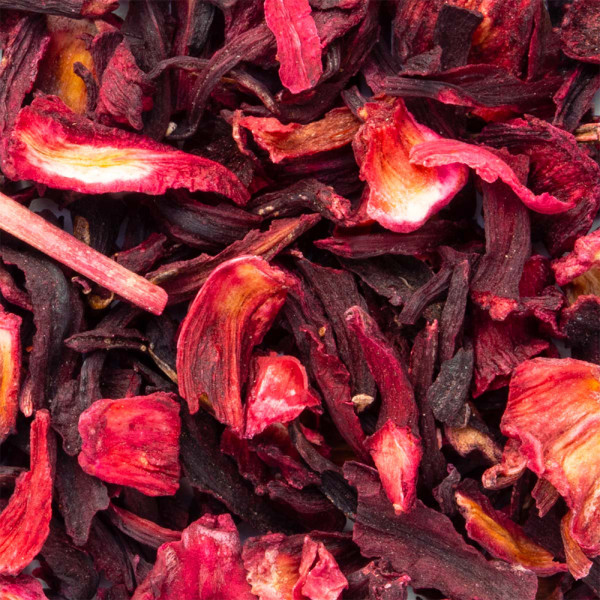
Hibiscus Flowers
Step into a swirl of deep crimson colour and captivating flavour with our hibiscus herbal infusion!
€5.90Discover
